
.svg)
Furniture stores live and die by their inventory. Every empty shelf is a missed opportunity, and every overstocked item is wasted money. Furniture store founders know the balancing act between meeting customer demand and managing costs—both crucial, yet often in tension with each other. Striking the right balance between demand and supply can be a fine line, and getting it wrong means missed opportunities or wasted resources. But what if you could shift the way you approach furniture inventory management to not only cut costs but also improve efficiency, all while ensuring your customers find exactly what they want? In the following sections, we’ll explore proven strategies that can help you achieve just that.
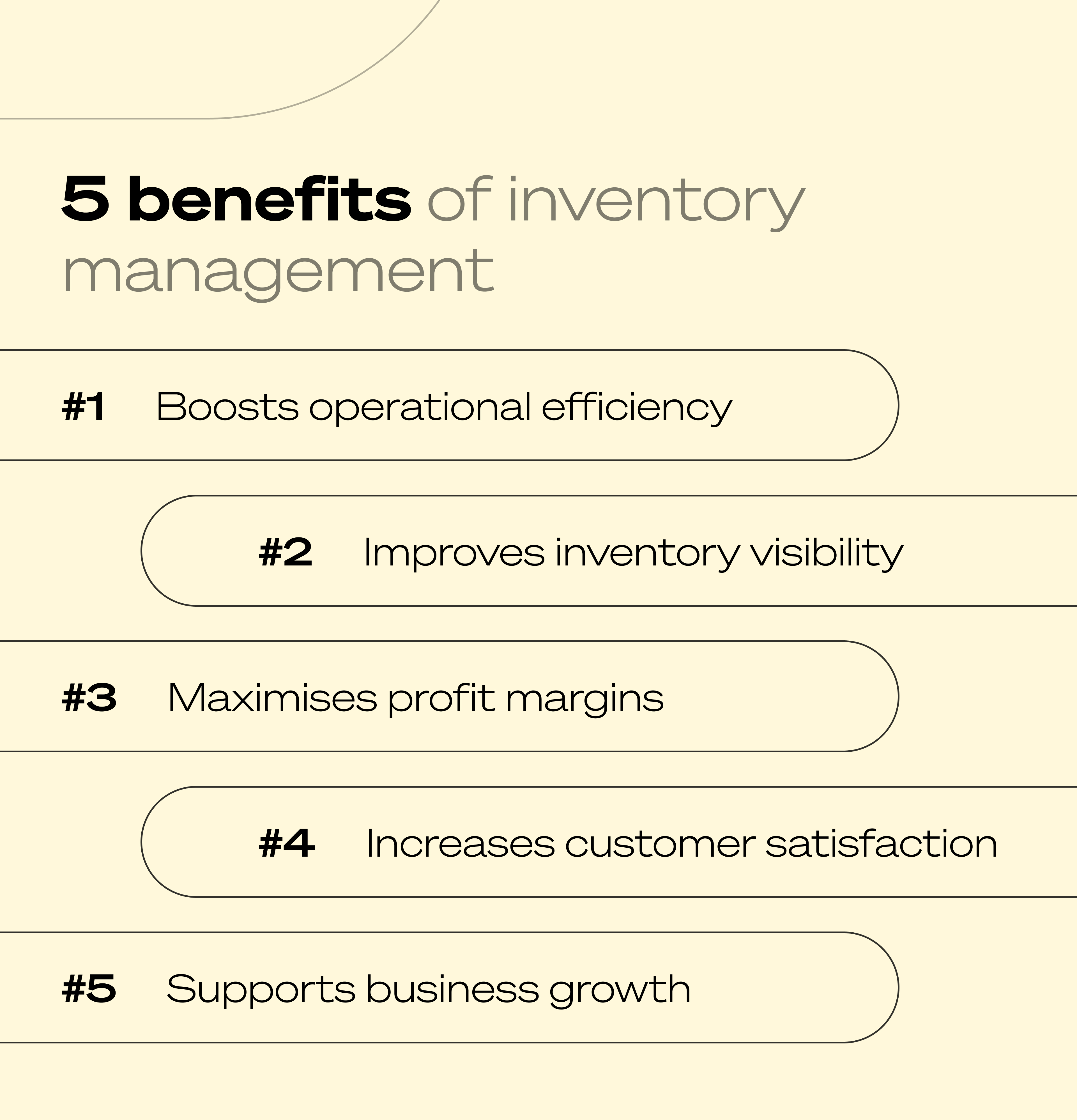
Effective furniture inventory management requires a solid approach to both strategy and execution. Let’s take a look at some key practices that can help you manage stock more efficiently and keep costs in check.
Even experienced furniture store owners can struggle with inventory discrepancies, especially as stock levels grow and demand fluctuates. Rather than just counting items, audits help you spot discrepancies early, whether it's overstocking or missing products, so you can address them before they impact sales, tie up capital, or frustrate customers.
Here are some things to consider when auditing your inventory:
For instance, if you notice a seasonal spike in sales for certain furniture pieces during the holidays, make sure those items are part of your regular audits. This way, you're prepared well ahead of time for increased demand.
Tracking inventory manually with paper or spreadsheets is outdated and prone to errors. Modern furniture inventory management technology allows you to monitor stock levels in real time, giving you a clear and accurate view of what’s available in your warehouse, what’s on the showroom floor, and what needs to be reordered.
Real-time tracking is essential because it ensures that the information you rely on is always accurate. This reduces the chances of running into issues like overselling or understocking, both of which can hurt your business. With real-time updates, you can also set automatic low-stock alerts, making it easier to reorder products as soon as they reach a certain threshold, without needing to manually check. Plus, by cutting down on manual checks, you improve overall efficiency and save time that can be better spent elsewhere.
Demand forecasting helps you predict which products will sell and when, so you can plan your stock levels accordingly. By analyzing your past sales data, you can identify patterns, such as seasonal spikes or trends that occur around holidays, and use this information to prepare your inventory in advance.
It’s also important to stay aware of broader market trends—such as shifts in customer preferences or material popularity—that can affect demand for certain products. Adjusting your stock based on these insights ensures you’re not caught off guard by changes in the market.
If you're looking for a more streamlined approach, demand forecasting software like QuickBooks Commerce or Forecastly can simplify the forecasting process, using historical sales data and industry trends to help you make more accurate stock decisions.
Efficient use of storage space is essential for maintaining control over your inventory and keeping operations running smoothly. When space is well-organized, you not only improve workflow but also reduce costs by minimizing wasted space and preventing overstocking. Without a solid storage strategy, you risk tying up valuable capital in unused inventory or losing track of products that could have been sold.
Here are some tips to help you make the most of your storage space:
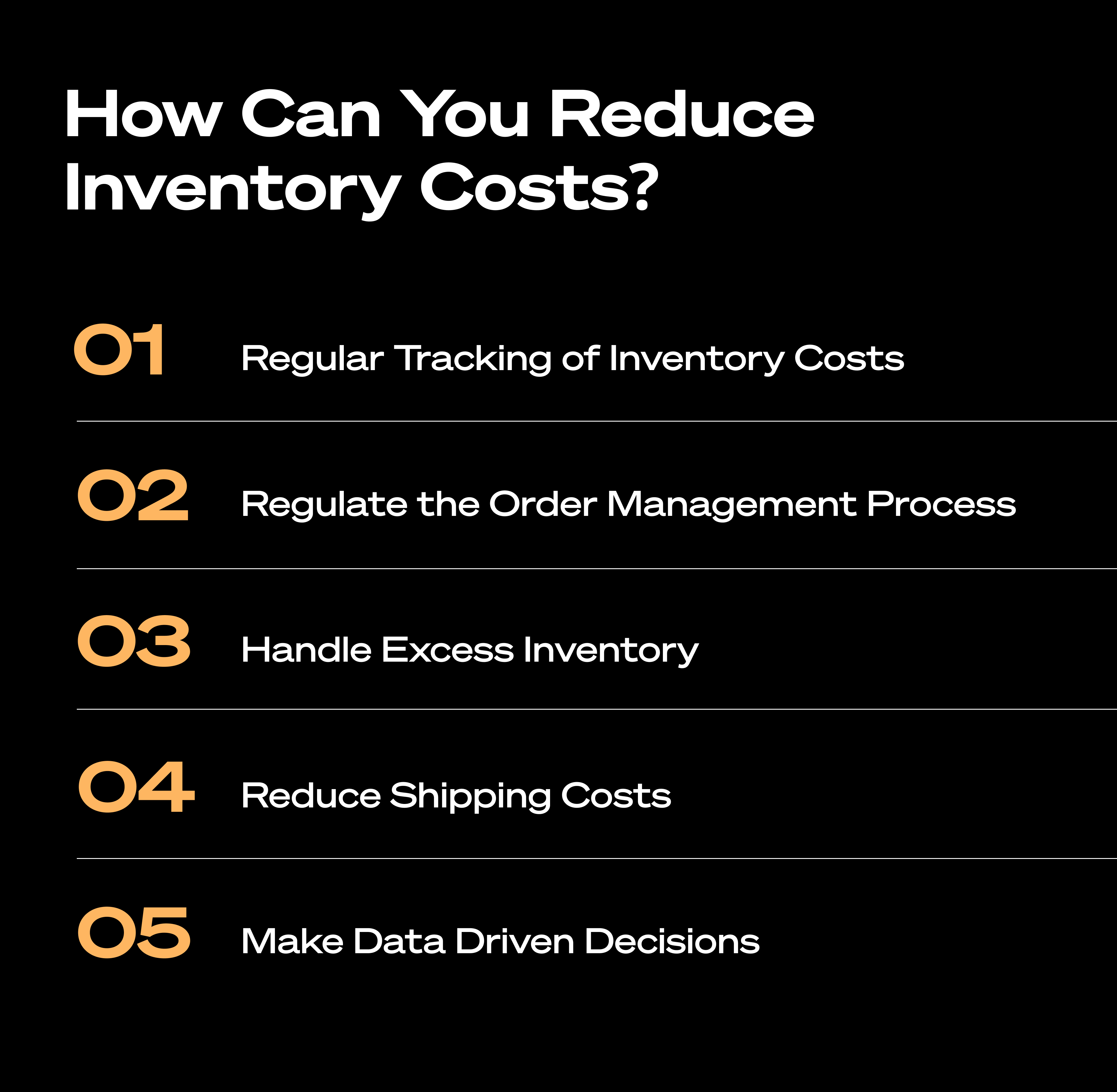
Cutting inventory costs doesn’t have to mean sacrificing quality or service. Instead, it’s about finding smarter ways to manage your stock and streamline your processes. Here are some effective strategies to help you save without compromising on what matters:
Excess inventory costs often come from ordering too much or too little. By fine-tuning your order quantities and strengthening supplier relationships, you can manage cash flow more effectively and avoid overstocking.
Start by working with your suppliers to determine the right minimum order quantities (MOQs) based on your sales data. This ensures you're not over-ordering while also making sure you have enough stock to meet demand. Building long-term relationships with your suppliers can also help you secure better terms, such as discounts for bulk orders or more flexible payment options, which can help reduce costs and improve profitability.
Reducing storage and handling costs is one of the most effective ways to improve your bottom line. One way to cut these costs is by outsourcing your storage needs to third-party logistics (3PL) providers, who can offer better rates on space and labor, allowing you to save money and focus on other areas of your business. Additionally, implementing automation in your warehouse and streamlining handling processes can reduce manual labor, speed up operations, and improve overall efficiency.
Your pricing strategy should be an ongoing process, not a one-time decision. For furniture stores, adjusting prices based on demand, stock levels, and competitor pricing helps keep products moving and profits up.
Instead of relying on fixed prices, use tools that automatically adjust based on demand fluctuations or geographic location. For example, if certain products are selling quickly in one area but slowly in another, adjust pricing to capture higher profit in demand-rich areas, without underpricing in slower markets.
Price optimization software can analyze sales patterns, competitor prices, and inventory levels to suggest price adjustments that maximize profit while preventing overstocking. For high-demand items, increase prices during peak periods, while subtly discounting slow-moving products to clear space without compromising margins.
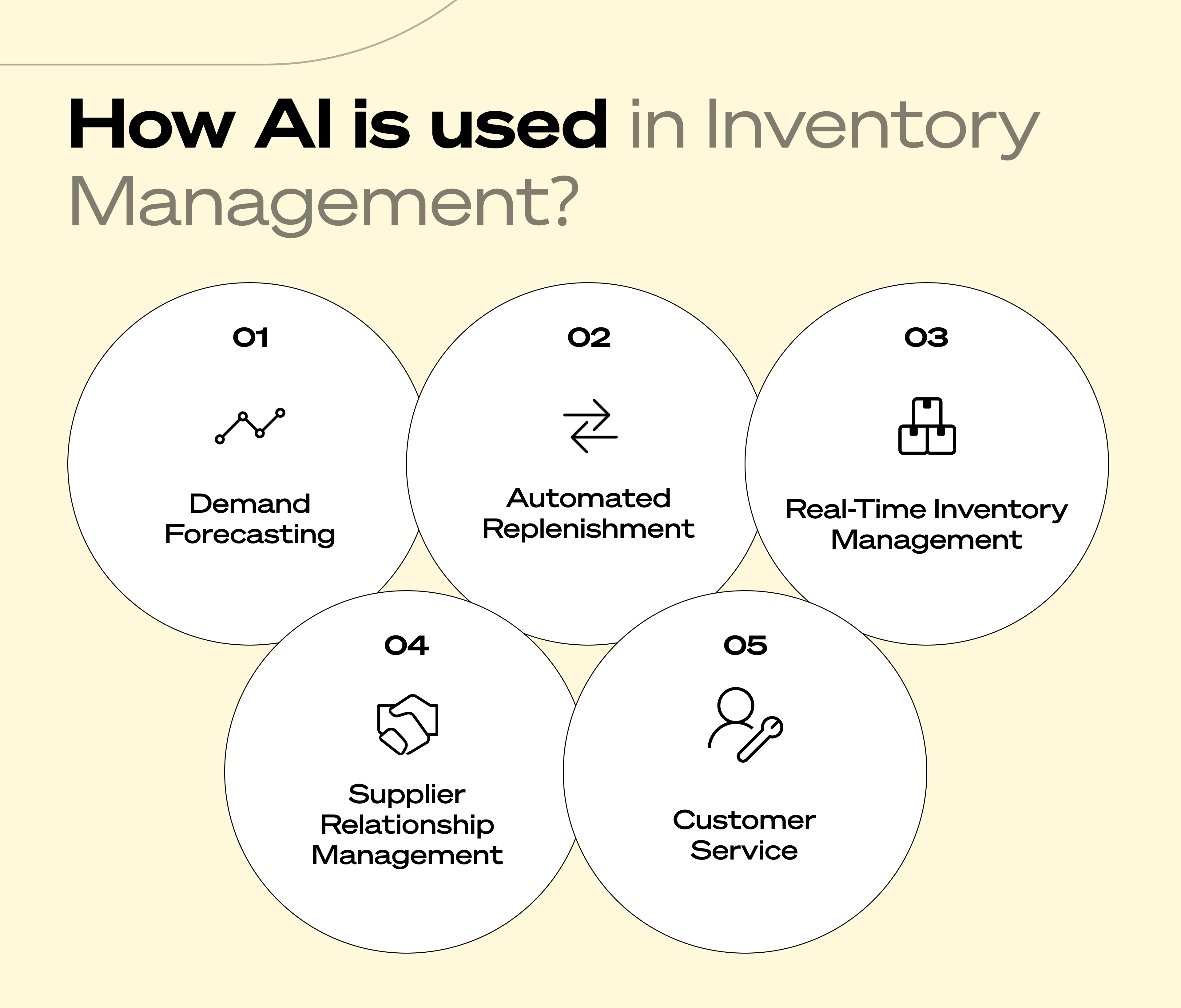
Adopting AI and technology can dramatically improve how you manage inventory, but it's only effective if your team knows how to use it. Here are some steps to ensure the tools you choose actually make an impact on your operations.
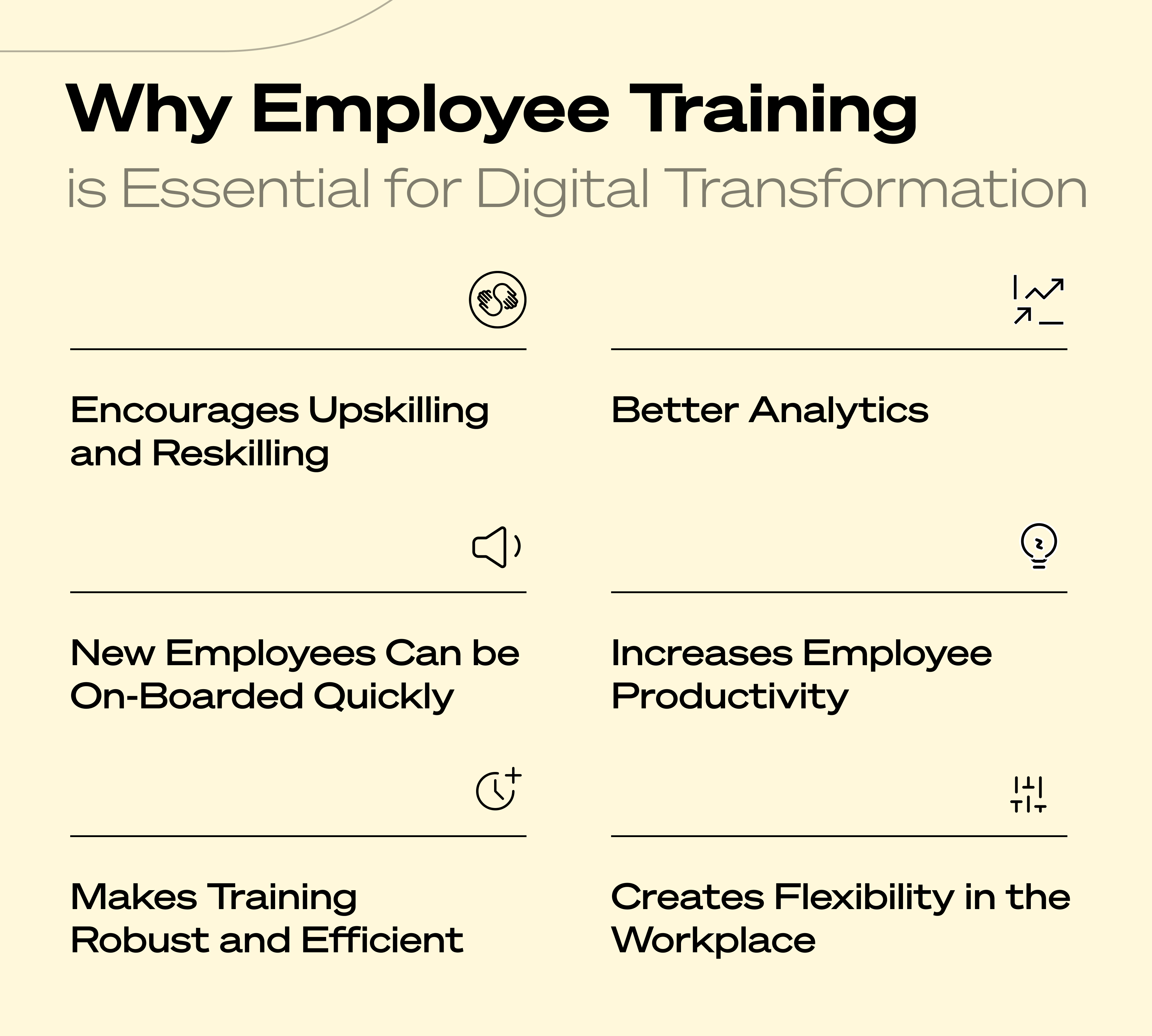
The best furniture inventory management technology is only as effective as the team using it. To ensure your investment in new technology delivers results, it's crucial to provide comprehensive, ongoing training to your staff. The point of training is not only to familiarize your staff with the system but to ensure they can apply it to keep your stock accurate and workflows efficient.
Start by providing hands-on training that focuses on the specific tasks they’ll need to perform daily. Rather than just going through the system’s features, show your team how to update stock levels, track inventory across different channels, and use data to make informed decisions.
Ongoing training is key. Technology changes fast, so regular check-ins and updates are necessary. For example, if the software introduces new features like automated low-stock alerts or advanced reporting tools, provide your team with training sessions on how to use these new capabilities effectively. It’s also important to create a feedback loop, so your team feels comfortable reporting issues or suggesting improvements that could streamline processes even further.
Choosing the right inventory tool comes down to finding something that fits your store’s unique needs and works with the systems you already use. The right solution should work seamlessly with your existing setup and make managing stock easier, not harder.
If you're looking for a way to streamline operations, Evoneer's Store Assistant AI is a strong choice. It helps you stay on top of stock levels, adjust to sales trends, and automate tasks that would otherwise slow things down. With Evoneer’s AI helper, you can track inventory across multiple sales channels and make more informed decisions without constantly manually updating numbers.
What makes it really stand out is how easily it fits into your existing setup. If you’ve already got processes in place, Evoneer fits right in, offering a clearer, more accurate view of your inventory without disrupting your workflow or adding extra layers of complexity.
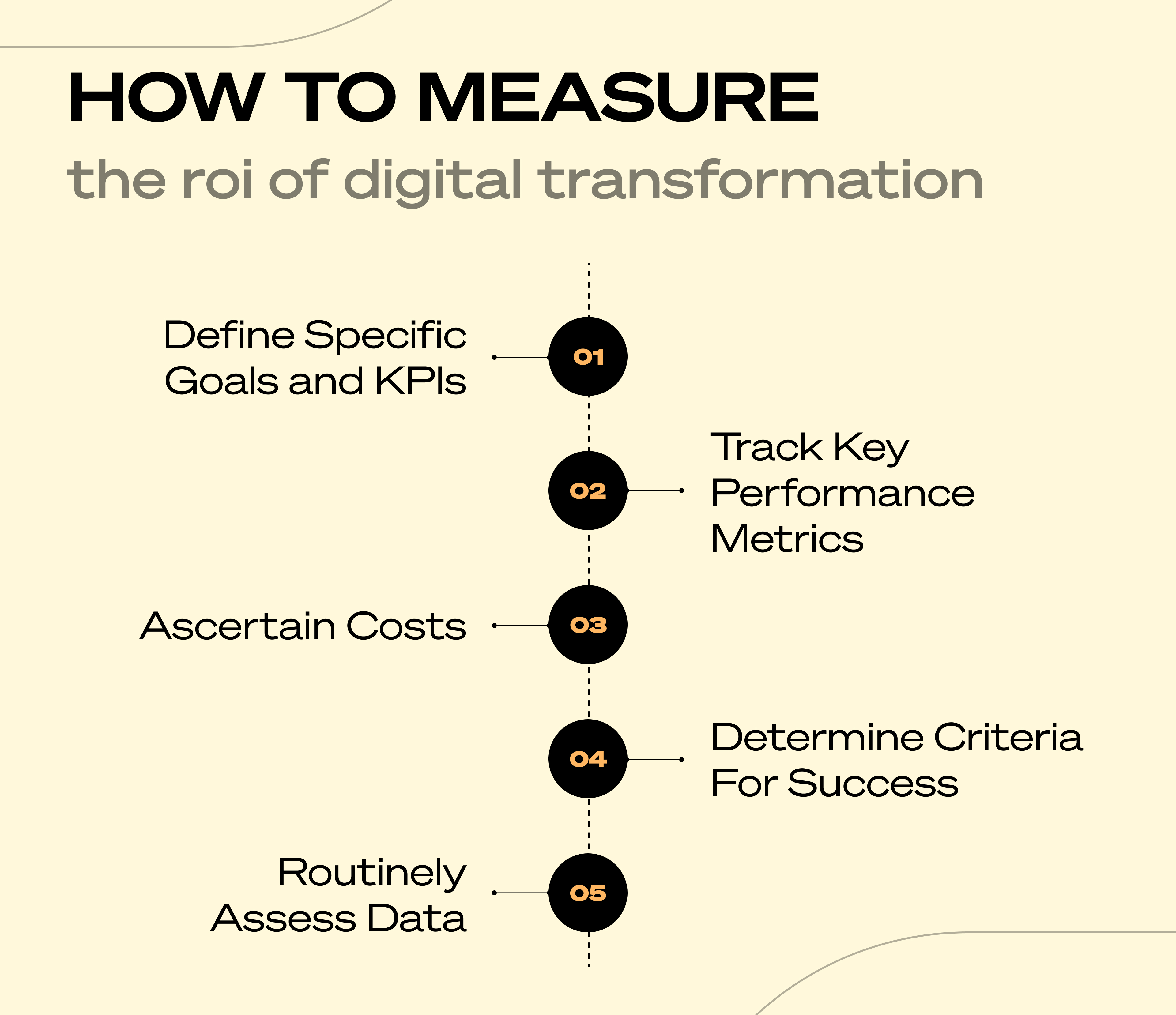
When you invest in new technology, it’s crucial to measure whether it’s delivering the value you expected. Too often, businesses focus on the initial cost without tracking the longer-term benefits. The real value comes from its impact on operations, efficiency, and profitability. To properly assess whether the technology is paying off, you need to track key performance indicators (KPIs) that align with your business goals.
Here are some KPIs you should track and what they can tell you about your ROI:
Once you've identified these KPIs, track improvements over time to determine how much your technology is contributing to better efficiency, profitability, and overall business growth.
Efficient furniture inventory management is about more than just knowing what’s on your shelves. Rather, it's about making the right decisions based on what works for you and your store. With AI assistants like Evoneer's, you can stay on top of stock levels, manage orders more efficiently, and cut down on manual work, all from one system.
Once you have the right system in place, the next step is to track the KPIs that matter most to your business. By focusing on the metrics that impact your operations directly, you can ensure your processes remain efficient and your decisions data-driven. The goal should always be to simplify operations, not complicate them. With these adjustments, you’ll be in a stronger position to manage your inventory and set your store up for future growth.
Contents

Evoneer is a generative AI tool that connects to your store’s systems for real-time answers.It helps retail teams get instant, accurate insights by simply asking natural questions.